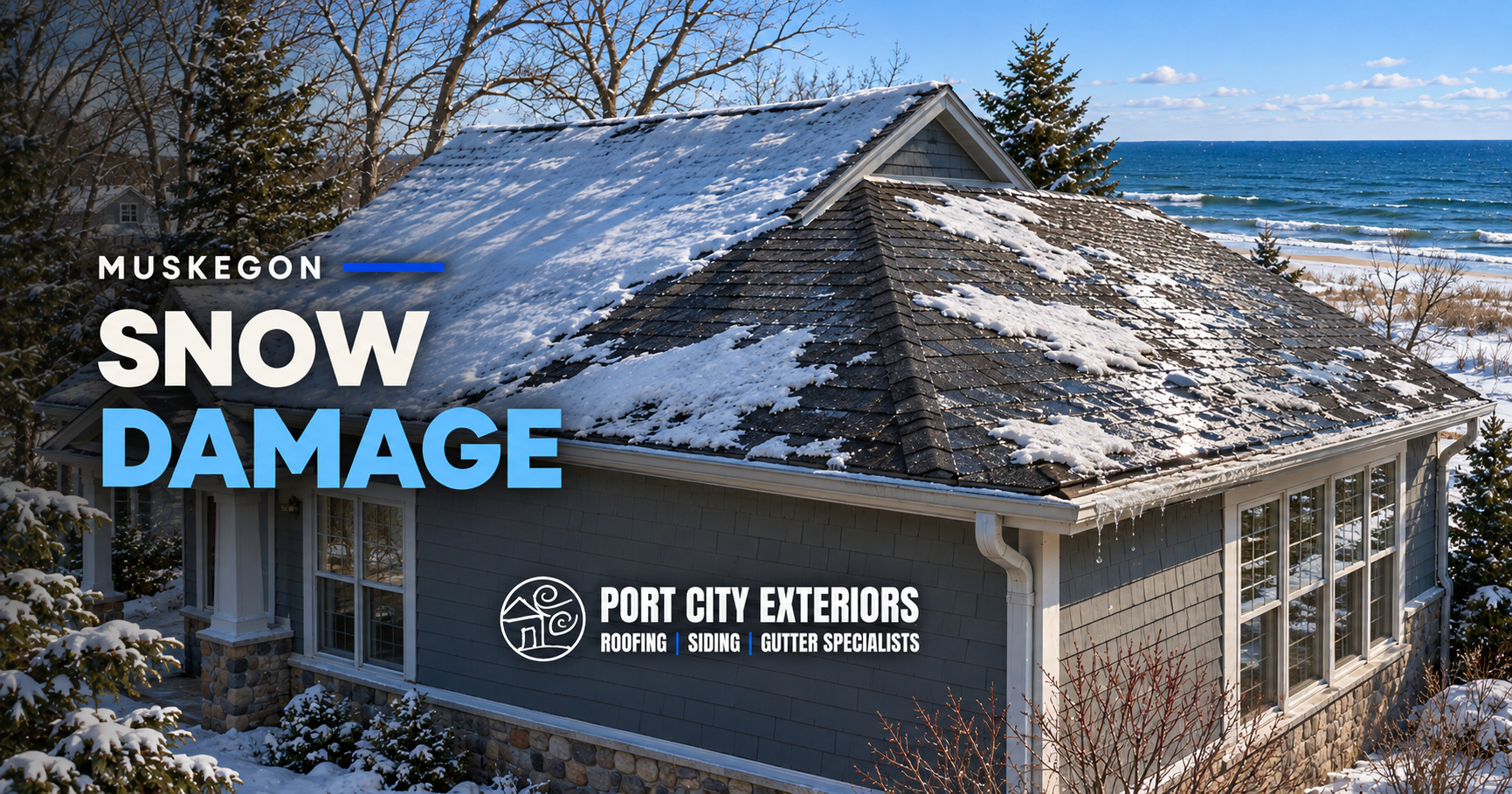

November is the time to check your Norton Shores roof for leaks, look for visible damage, and schedule an inspection ahead of December snow. If something already looks wrong, getting it checked now gives you time to understand the problem and plan the repair.
Our friend, WWMT News Channel 3 meteorologist Jeff Porter, highlighted a possible wet-snow setup in a November 19 post. Describing one outcome from the long-range European forecast model, he pointed to “barely cold enough air for a wet snowfall starting 11.25.26”.
View this post by @JeffPorterWX on X
November 25 is less than a week away from the date of his post. The timing and location can still change, and this model scenario doesn’t establish when Norton Shores will receive its first snowfall. It does give homeowners a practical reason to move roof checks up the list.
A stain on the ceiling or a missing shingle deserves attention even when water isn’t actively dripping. Once snow covers the roof, some of those clues become harder to see. The useful work happens before that cover arrives, while a contractor can assess the exposed roof and explain what needs attention.
Why lake effect snow matters
Alongside the storm system Jeff described, lake effect snow is another consideration for Norton Shores homeowners. The National Weather Service explains that lake effect snow develops when cold air moves across relatively warm, open lake water, picking up heat and moisture.
That snow can fall in narrow bands, with conditions changing sharply over short distances. A nearby community’s snowfall total won’t necessarily describe what lands on your home.
You don’t need a prediction for December’s biggest storm to get started. Checking the roof’s condition, drainage, and attic now addresses problems that can matter through the winter.
Look for leaks inside first
Start with the rooms you use every day. Look for new ceiling stains, dark patches, or peeling paint, especially around the upper floor and near a chimney.
If your attic is safely accessible, look from a secure walking surface for damp insulation, stained wood, or visible dripping. Leave areas without safe access to the inspector.
These signs need a diagnosis. GAF’s guide to identifying roof damage notes that interior stains can come from outside leaks or moisture trapped inside the home. A ceiling mark alone doesn’t tell you which problem you have.
Take photos and note when you first noticed the change. Mention whether it appeared after rain, during snowmelt last winter, or without an obvious weather connection. That history gives the inspector something specific to investigate.
Check visible damage and book an inspection
From the ground, use binoculars or your phone’s zoom to look for missing shingles, visibly curled edges, fallen branches, and gutters pulling away from the house. This is a way to collect observations. A distant view can’t establish the condition of everything on the roof.
Schedule a professional roof inspection in November, particularly if you’ve noticed a leak, storm damage, or a problem that returned after an earlier repair. GAF’s winter roof maintenance guidance recommends inspections to identify potential leak and damage areas before storms arrive.
Ask the contractor to check shingles, roof openings, and flashing, the material that directs water away from joints around features such as chimneys.
The inspection should leave you with clear priorities. Ask what needs prompt repair, what can be monitored, and whether weather or material requirements affect the work’s timing. Request photos and a written description of any proposed repair.
If water is already entering the house, report it promptly. An active leak shouldn’t wait for a routine seasonal appointment.
Clear the path for melting snow
Arrange to remove leaves, sticks, and other debris from gutters and downspouts before they become trapped in ice. Check that downspout outlets are open too. A clean gutter still needs somewhere to discharge the water it collects.
The National Weather Service in Grand Rapids recommends clearing this debris so melting roof snow can drain through the gutter system.
Have loose or damaged gutter sections assessed during that work. If access requires climbing onto the roof or using a ladder in wet, frosty, or icy conditions, arrange professional help.
Clear drainage is useful preparation, but it doesn’t address every cause of winter roof trouble. Heat escaping into the attic also needs attention.
Bring up last winter’s ice problems
Tell your inspector if last winter brought repeated ice buildup along the roof edge or leaks during snowmelt.
Heat escaping from the living space can warm the roof and melt snow. That water can refreeze at a colder edge, forming an ice dam that holds water behind it. The trapped water can then find a route into the home.
For a vented attic, ENERGY STAR explains that air sealing, insulation, and proper ventilation work together to limit heat and moisture entering from below and reduce ice dam risk. Insulation shouldn’t block the vents beneath the eaves.
Ask whether your home needs an attic assessment as part of the winter preparation plan. Repeated ice problems deserve an explanation before another season starts.
Port City Exteriors offers free roof inspections in Norton Shores, along with roof and leak repairs. Bring your photos, mention any unresolved problems from last winter, and use the November inspection to agree on the work that needs attention before December.