
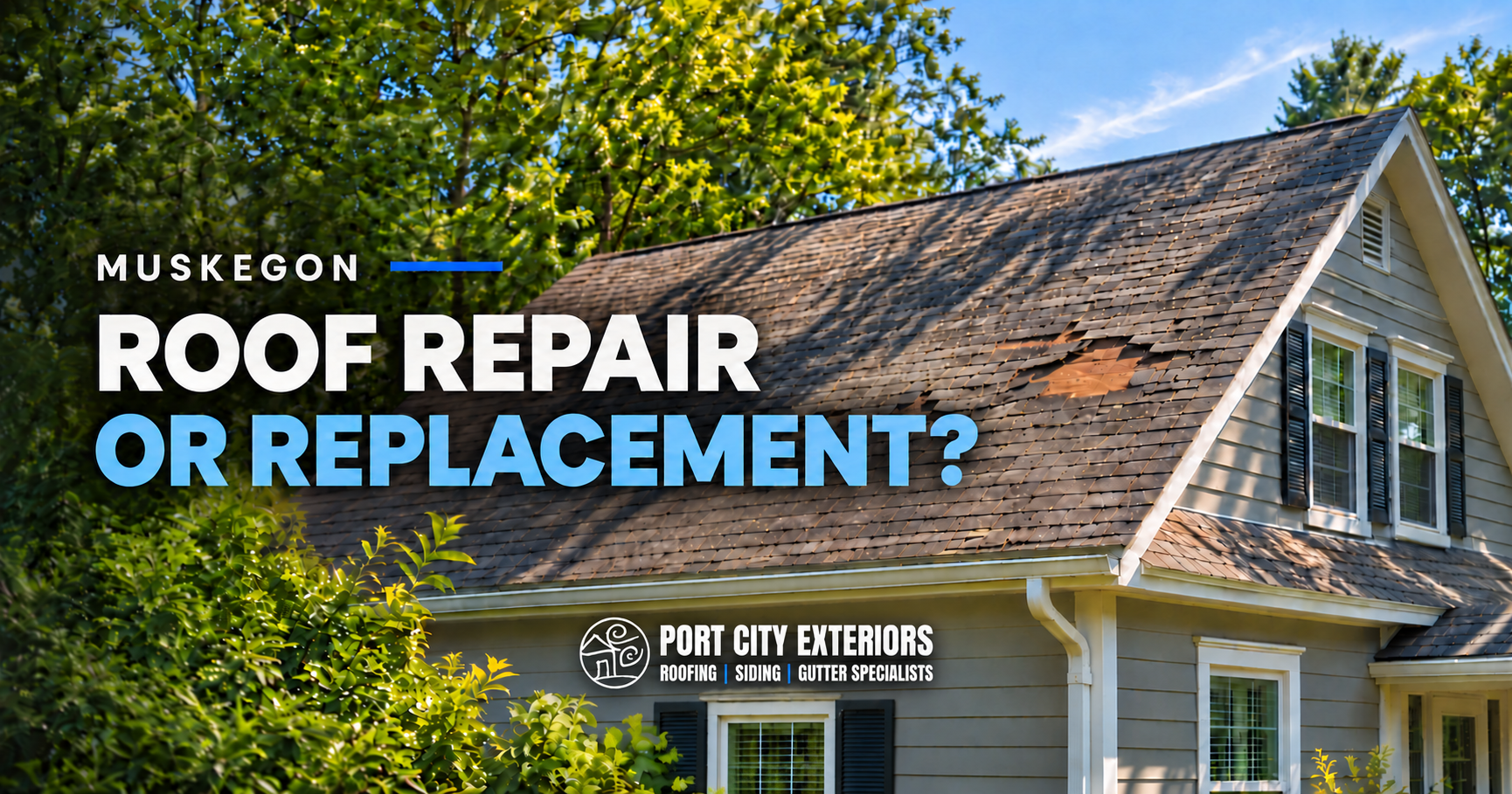
A roof leak doesn’t automatically mean you need a new roof. For Muskegon homeowners, the decision starts with finding out what failed, how much of the roof is affected, and whether the surrounding materials still have useful life left.
That last part deserves attention. Fixing one damaged area can make sense when the rest of the roof is sound. When problems are spread across an aging roof, another repair may only buy a little time. You should be able to understand which situation you’re paying to address before approving the work.
When roof repair makes sense
A repair is worth considering when the damage is limited and the rest of the roof remains in good condition. A small area of damaged shingles, for example, calls for a different conversation than deterioration across several roof slopes.
Roofing manufacturer GAF identifies roof age, damage extent, previous repairs, and the cost of each option as the main factors in choosing between repair and replacement. Age provides context, but it doesn’t explain the condition of your particular roof by itself.
Leaks also deserve a closer look around chimneys, skylights, and plumbing vents. These openings rely on flashing, the material that directs water away from joints and transitions. GAF’s roof inspection guide identifies bent or detached flashing as a potential route for water to enter.
Ask the contractor to show you the damaged area and explain the proposed fix. What caused the problem? What will be replaced? What condition are the nearby materials in? A useful repair recommendation should answer all three.
When replacement deserves consideration
Widespread wear changes the decision. Recurring leaks, extensive shingle damage, and a sagging roofline are reasons to have a professional evaluate whether replacement is necessary. Sagging also needs assessment for a possible structural problem.
GAF’s residential roofing guidance recommends discussing replacement when a roof has extensive damage or recurring issues. It also explains that roofing lifespan depends on installation, weather, maintenance, and materials.
The useful question is how much serviceable roof remains after the proposed repair. If the contractor recommends replacement, ask for photos that show the extent of the problem. If repair is still an option, ask what it would leave unresolved.
You don’t need a sales pitch about the biggest possible project. You need enough information to choose work that fits the condition of your home.
Winter leaks need a diagnosis
For a Muskegon homeowner, a leak that appears during snowmelt is an important detail to mention during an inspection. An ice dam may be involved.
An ice dam forms when melting snow refreezes near a colder roof edge. Water can collect behind that ice and find a path into the house. The University of Minnesota Extension explains that heat escaping from the home often drives this process.
That creates a practical problem for a repair plan focused only on visible roof damage. If heat loss helped cause the leak, the inspection should also consider air leakage into the attic and insulation. Replacing damaged roofing alone may leave the conditions that caused the ice dam in place.
Tell the inspector when you first noticed the water and what the weather was doing. A leak during heavy rain and one during snowmelt give them different clues to investigate.
Get an estimate you understand
Before comparing prices, compare what each contractor proposes to do. Ask for a written explanation of the work, including the materials involved and how additional damage discovered during the job would be handled.
A few questions can make that conversation more useful.
- What evidence supports repair or replacement?
- Does the estimate address the cause of the leak?
- What work is included around flashing and roof openings?
- How would damaged wood beneath the roofing affect the price?
- What warranty applies to the materials and the workmanship?
Port City Exteriors offers free roof inspections in Muskegon, along with roof repair, flashing repair, and replacement services.
Start with the inspection and ask to see what it reveals. Before you approve the estimate, you should understand what failed, how the proposed work addresses it, and what problems, if any, would remain.